

Journey into the past and discover your family’s history
In 1980 I went off to university far from anywhere any of my ancestors had ever lived and the genealogy bug lay dormant for years. It didn't wake up again until I moved to Scotland in the early 1990s. Not that any of my ancestors hailed from Scotland either, but I satisfied my craving by doing research for friends, spending happy days at the General Register House and Scottish Archives in Edinburgh. I became interested in “house history”, researching the old farm
that I lived on and even dug into the history of vegetable varieties as a “seed sleuth” for the Henry Doubleday Research Organization!
Then came the internet and everything changed! Initially, as archives around the world set up websites and put their catalogues on line, it was still a case of ordering in paper copies of documents, or in some cases microfilms. Around the same time I moved back to the land of my birth, Canada, and discovered LDS family history centers and the option of ordering in microfilms. I spent many, many hours scrolling through microfilms. Between ordering in from archives and the LDS center I was able to carry out significant new research particularly on my Belgian and Spanish family lines. And then, bit by bit, the documents themselves were digitized and became available online. This took my abililty to do research to a whole new level.
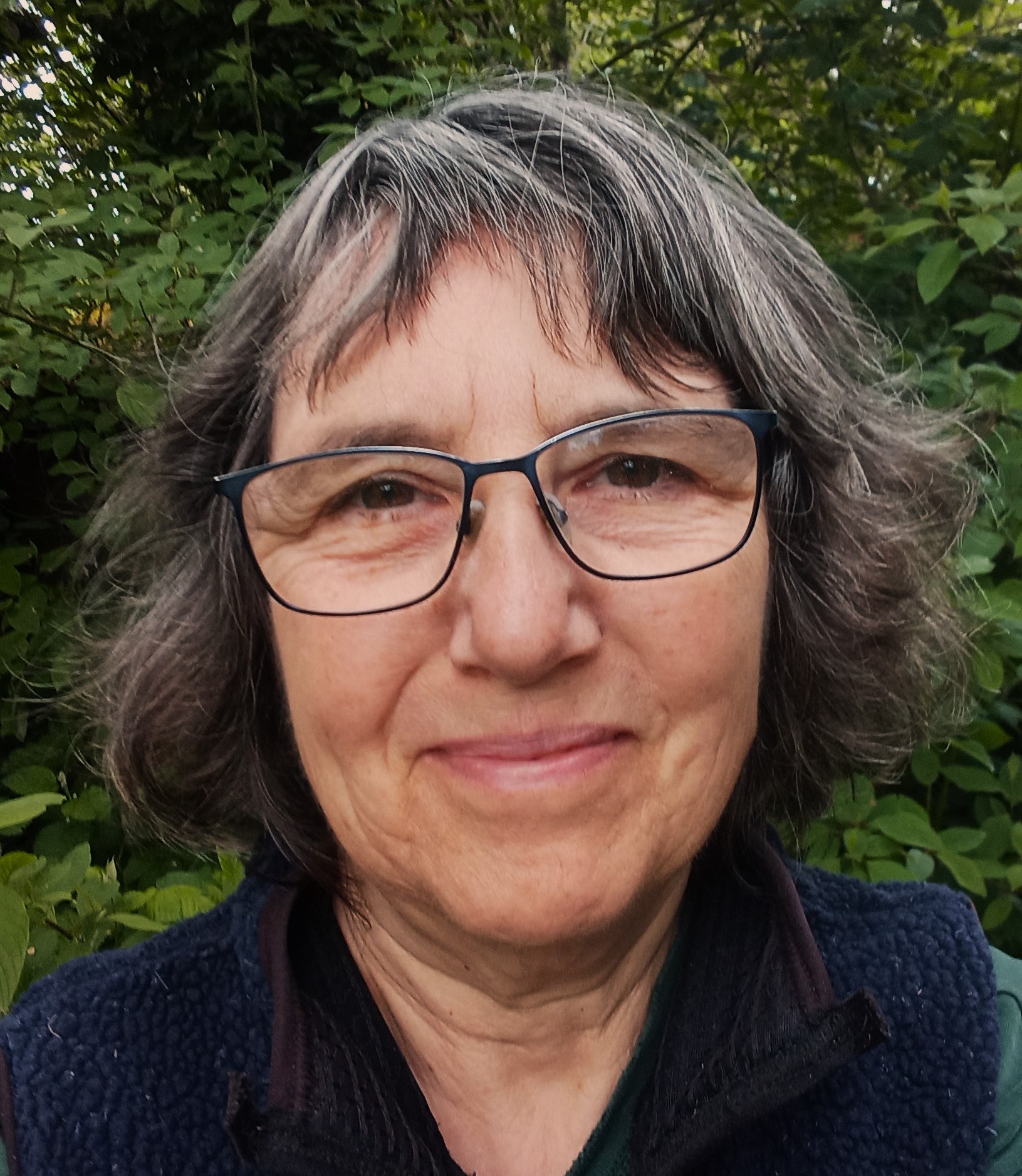
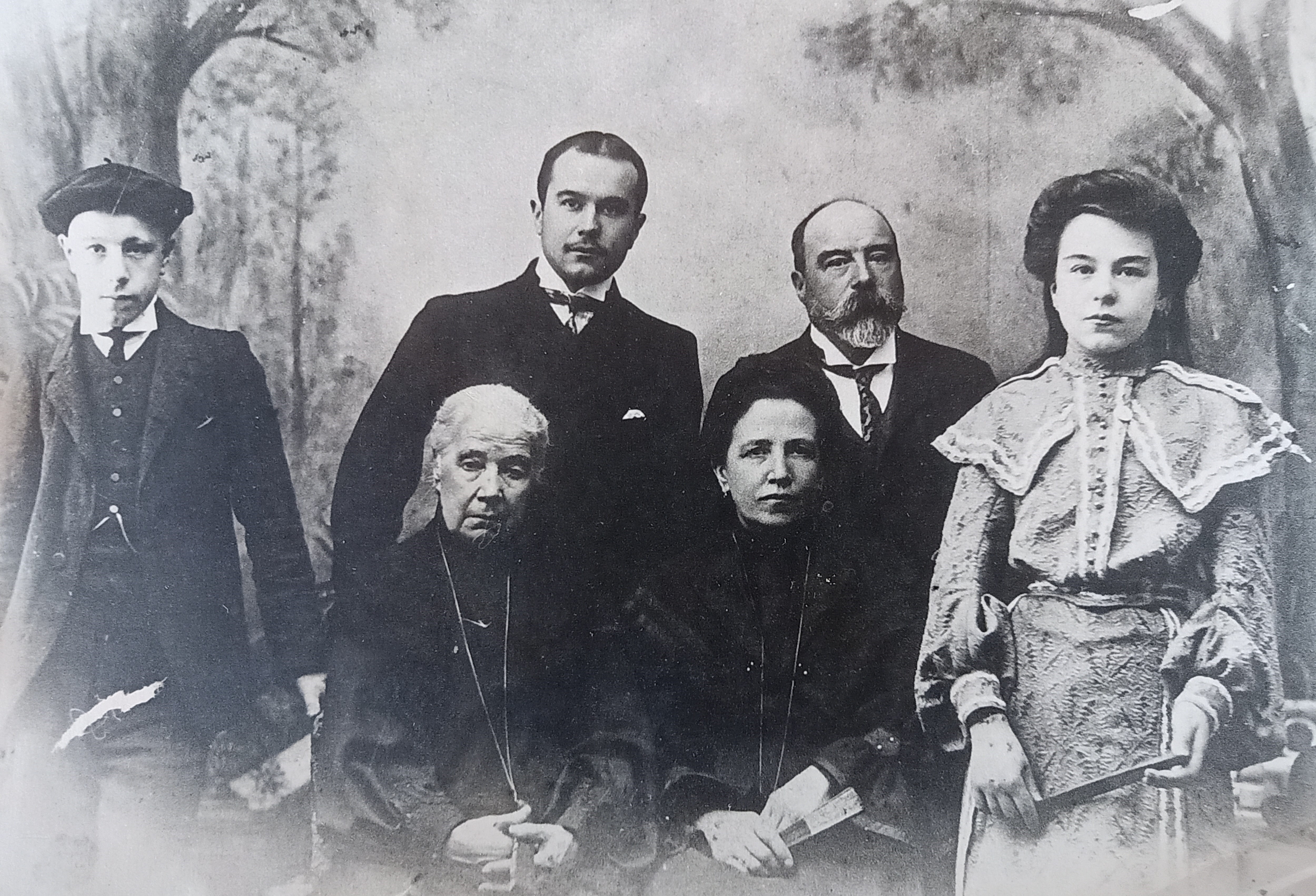
You may have guessed that the above is not a picture of me. The young woman on the right is my paternal grandmother, with her brothers and parents. Anyone who knows me takes one look at this picture and immediately says "You look just like her!"
I grew up in a family that did not do conflict well. At any given time, some members of the family would, for whatever reason, not be talking to one another. On both sides of the family. And this had been going on forever. In fact, my father used to joke that there had been one family disagreement that had carried on for 300 years! (It was true, too. Many years later a Spanish archive kindly sent me 2kg of photocopied court documents and a microfilm to prove it!)
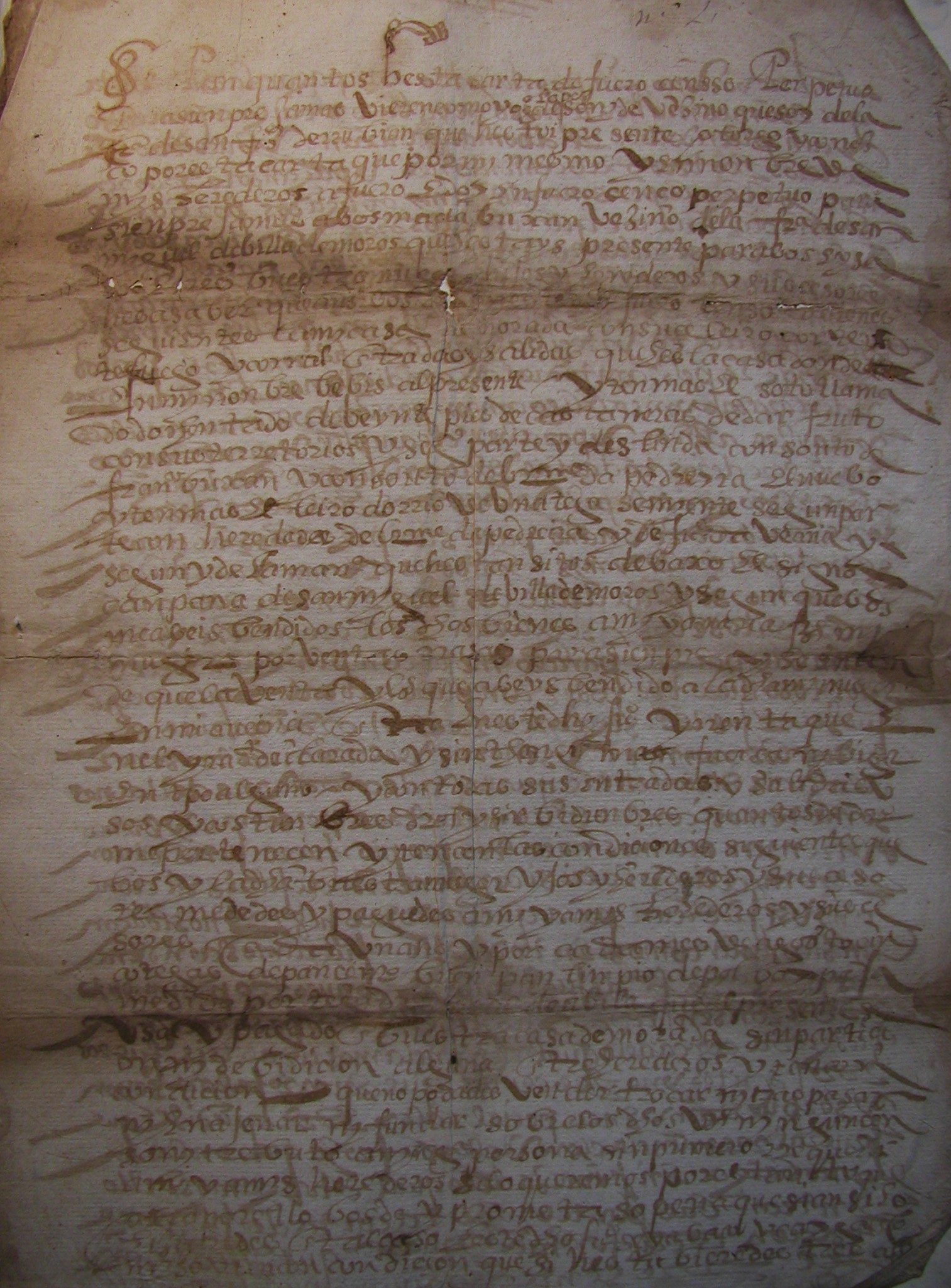
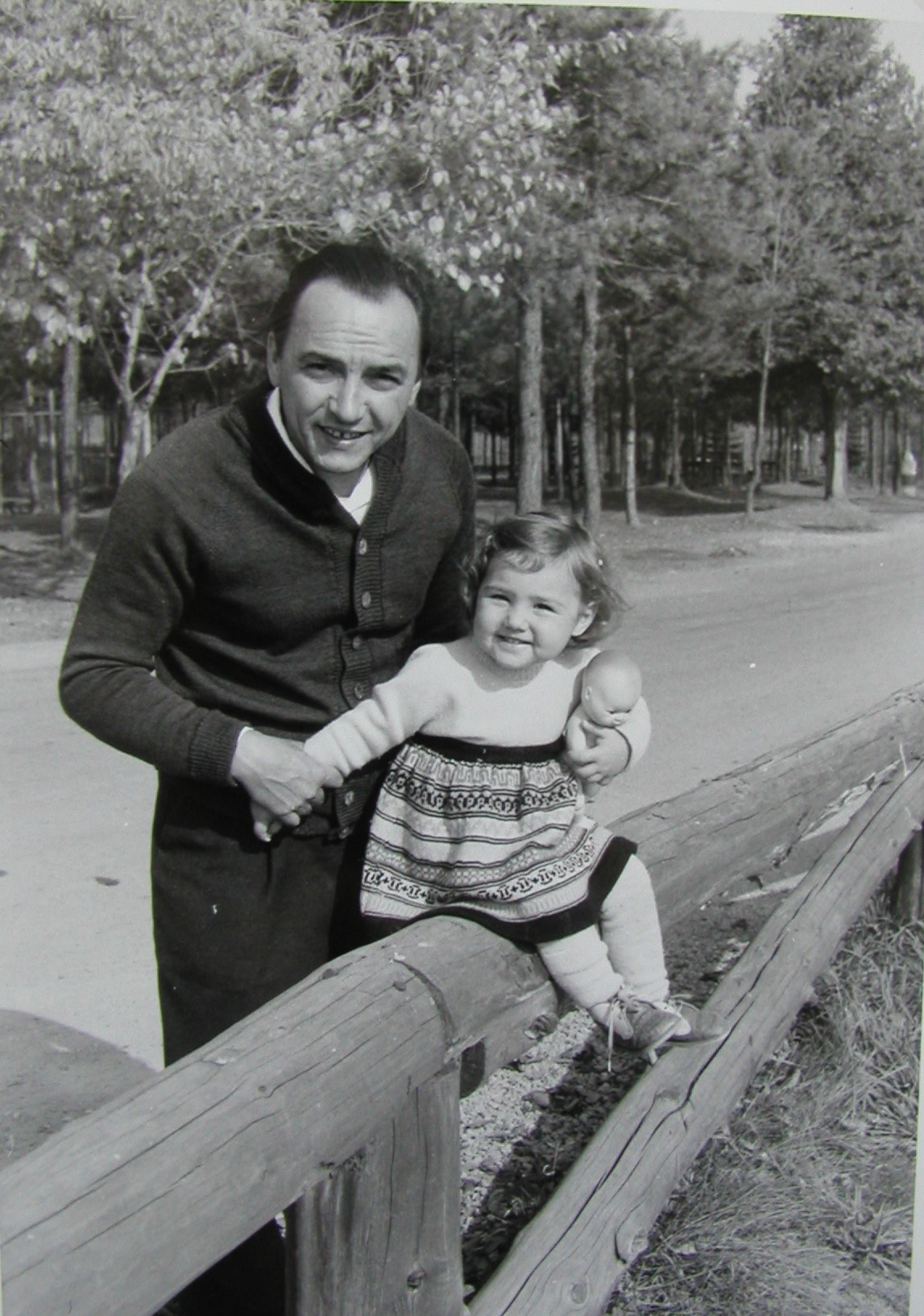
My family did, however, value its history. My Spanish father in particular was immensely proud of his heritage and had a large chest full of old family documents. Mostly, they dealt with land transactions and inheritances and the oldest dated from 1599! As a teenager I spent hours with my father poring over documents like the one in the picture on the left. (The picture below is me with my dad, ca 1963.)
Today I work overwhelmingly online, utilizing a huge and ever increasing number of resources. Increasingly, I am also becoming involved in genetic genealogy, using DNA to identify unknown recent ancestors and so add to clients' knowledge about their family's history.
A new, quite exciting venture is combining family history research with my work as a Clinical EFT Certified Practitioner. Doing so allows us to not only learn about our families' pasts, but also process and heal intergenerational trauma and dysfunctional patterns created by our ancestors' life experiences. Then we can not only live our lives free of the burdens of the past but also prevent them being passed on to the next generation!
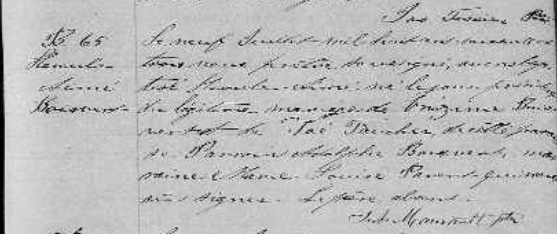
The French-Canadian Origin of New Hampshire Grandma Aimée
This week’s case study: The client was keen to find out more about the French-Canadian origins of her beloved grandmother, Aimée.
The challenge: All she knew was that Aimée’s parents were Ernest and Violet Boisvert and that they lived in New Hampshire.
The first step was to try to locate the family in New Hampshire. The 1940 census shows Ernest G Boisvert living in Manchester, Hillsborough, New Hampshire with his wife Violet and his children Constance G. (11), Aimée I.?(5) and Claire E. (1). Ernest himself is 35, so, born around 1905, and he is an optometrist in a jewelry store. Violet is 33.
At this point I had to choose which family line to pursue. I decided to trace back the Boisvert line.
Ernest and Violet were also living in Manchester at the time of the 1930 census, with their eldest daughter Constance. The two younger ones were not yet born. Interestingly, he was then a carpenter, so he must have made a career change at some point during the next 10 years.
The 1920 census showed Ernest, single, with his parents – Aimé and Abeline - in Manchester. He is one of 8 siblings still living in the home. All the children were born in New Hampshire, but both of their parents had given their place of birth as Canada. Aimé, at 56, was a lawyer. According to the record he had emigrated from Canada in 1877 and was naturalized in 1886.
The 1910 census gives us a bit more information about Aimé Boisvert. 47 years old at the time, putting his year of birth around 1863, he was born in English Canada, i.e. most likely Ontario. This time his wife’s name was recorded as Alexina, so we’ll have to see which was correct.
I knew from the census records that Aimé had become naturalized in the US in 1886. That made it possible to look for naturalization records. Sure enough, he filed a Declaration of Intention in 1886 which states that he was born “on or about” 8 Jul 1863 in Canada and had come to the US in 1865 as a minor. Interestingly, young Aimé was a “trader” at the time of his declaration, so he must have studied law afterwards.
I am always amused by the wording “on or about” for date of birth in official government documents. Today, the expectation is that everybody knows exactly when they were born, but clearly the government at the time realized that that was not the case then!
Next, I searched for and found Aimé’s marriage certificate. He and Alexina (yes, her name was Alexina rather than Abeline) were married in Manchester, New Hampshire, on 5 May 1893. The document gave me three other vital pieces of information: the name of Aimé’s father, Onésime, his mother, Zoë Faucher or Fancher, and his place of birth, St. Thomas.
These last pieces of information made it possible for me to find the record of Aimé’s baptism on 9 Jul 1863 in St Thomas de Pierreville. Hercule Aimé Boisvert was born the previous day, 8 Jul, and his parents were Onésime Boisvert and Zoë Faucher, both “of the parish”. His godparents were Adolphe Boisvert and Marie Louise Parent.
Saint-Thomas-de-Pierreville was a parish in what is now the municipality of Pierreville in the Nicolet-Yamaska Regional County, Quebec. It is located at the confluence of the Saint Lawrence and Saint-François rivers, at the edge of Lac Saint-Pierre. Note that the 1910 census taker had incorrectly assumed that Aimé had been born in “English Canada”, probably because Aimé’s English was fluent and accent free, having lived in New Hampshire since the age of 2!
We have now conclusively traced grandmother Aimée’s ancestry back to “French Canada”. And this is just the start – there are many more avenues that could be explored for her family, e.g. tracing the Boisvert line further back in time or following one of the maternal lines.

@ Copyright 2026 All Our Pasts Are History | All rights reserved
@ Copyright 2026 All Our Pasts Are History
All rights reserved