

Journey into the past and discover your family’s history
In 1980 I went off to university far from anywhere any of my ancestors had ever lived and the genealogy bug lay dormant for years. It didn't wake up again until I moved to Scotland in the early 1990s. Not that any of my ancestors hailed from Scotland either, but I satisfied my craving by doing research for friends, spending happy days at the General Register House and Scottish Archives in Edinburgh. I became interested in “house history”, researching the old farm
that I lived on and even dug into the history of vegetable varieties as a “seed sleuth” for the Henry Doubleday Research Organization!
Then came the internet and everything changed! Initially, as archives around the world set up websites and put their catalogues on line, it was still a case of ordering in paper copies of documents, or in some cases microfilms. Around the same time I moved back to the land of my birth, Canada, and discovered LDS family history centers and the option of ordering in microfilms. I spent many, many hours scrolling through microfilms. Between ordering in from archives and the LDS center I was able to carry out significant new research particularly on my Belgian and Spanish family lines. And then, bit by bit, the documents themselves were digitized and became available online. This took my abililty to do research to a whole new level.

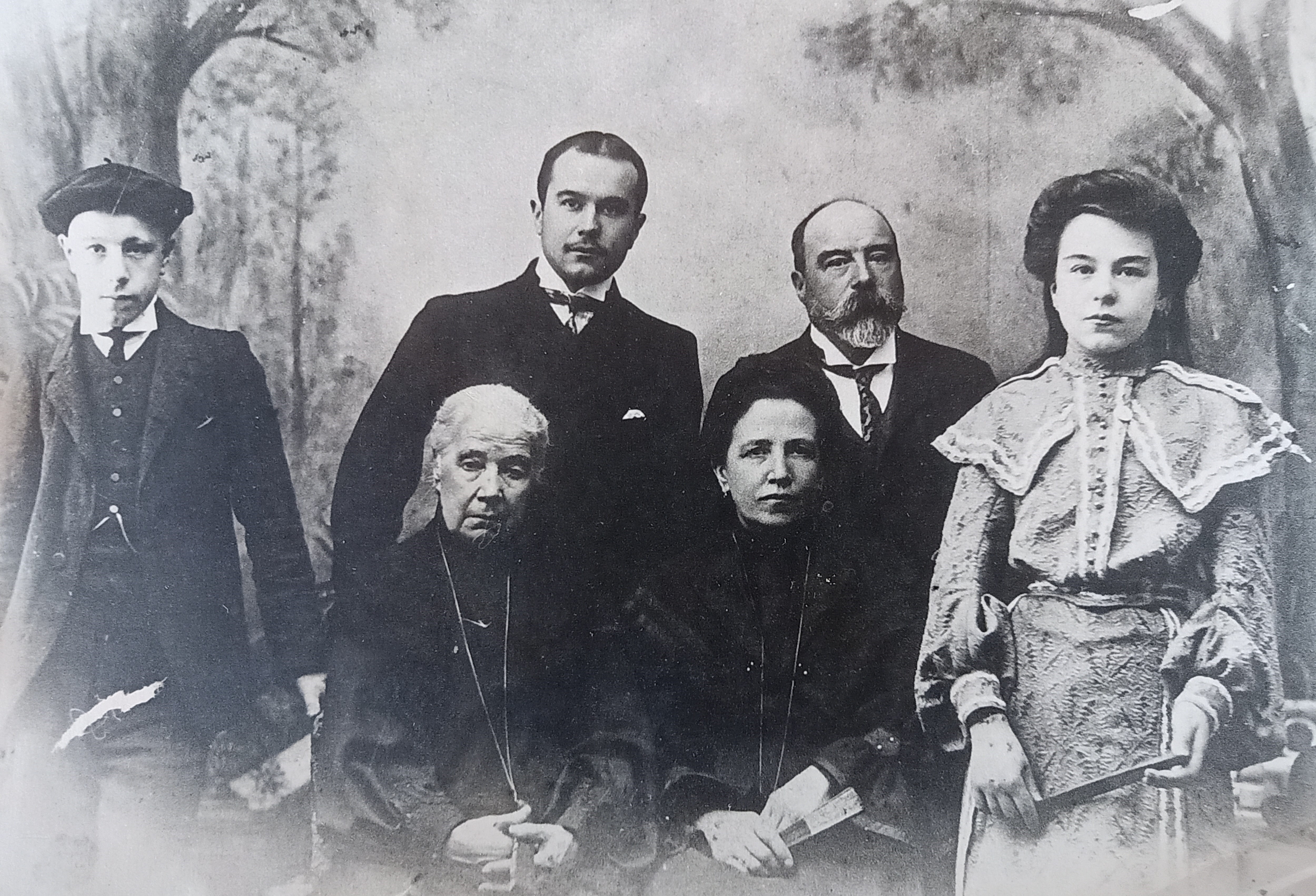
You may have guessed that the above is not a picture of me. The young woman on the right is my paternal grandmother, with her brothers and parents. Anyone who knows me takes one look at this picture and immediately says "You look just like her!"
I grew up in a family that did not do conflict well. At any given time, some members of the family would, for whatever reason, not be talking to one another. On both sides of the family. And this had been going on forever. In fact, my father used to joke that there had been one family disagreement that had carried on for 300 years! (It was true, too. Many years later a Spanish archive kindly sent me 2kg of photocopied court documents and a microfilm to prove it!)
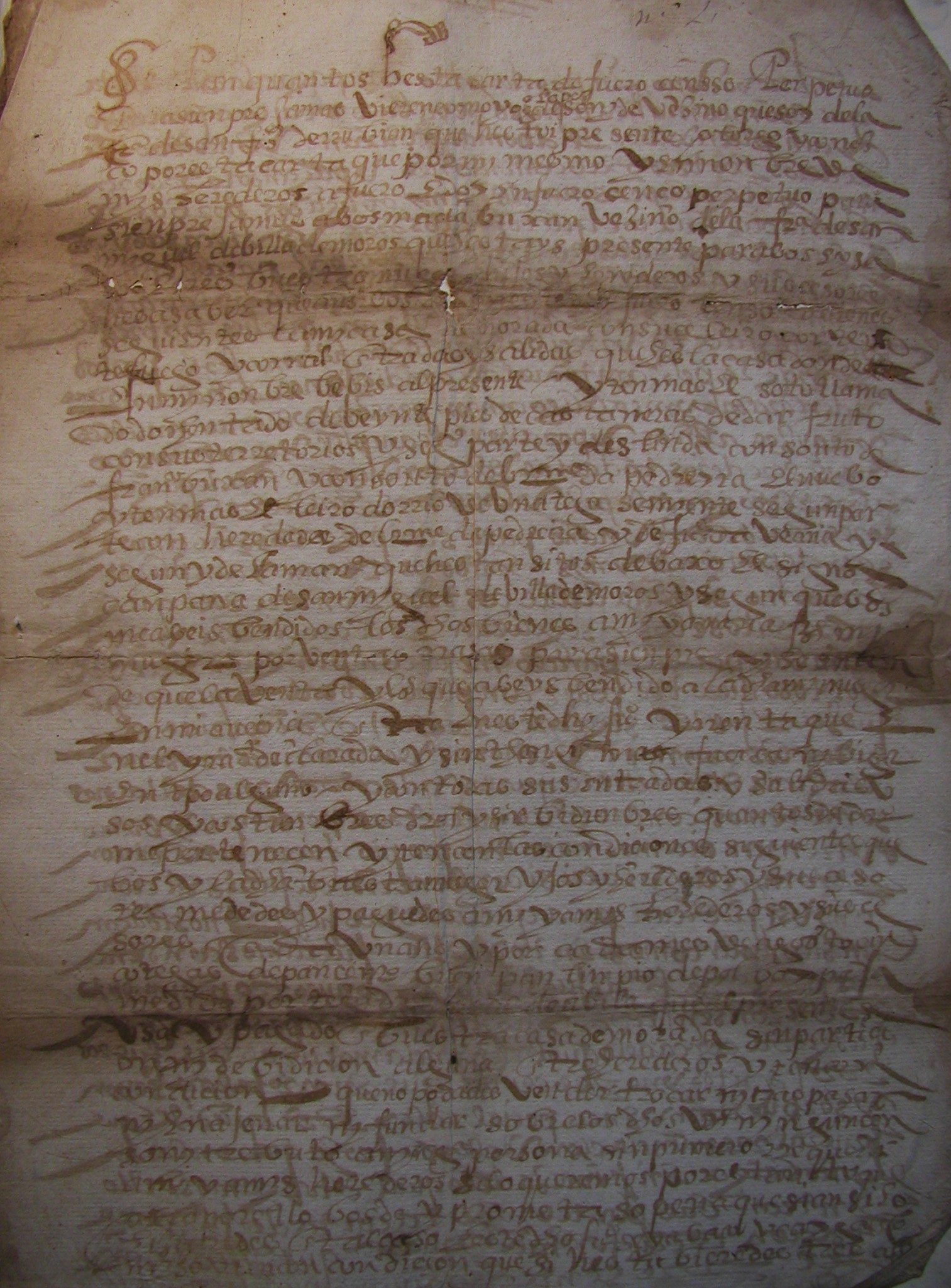
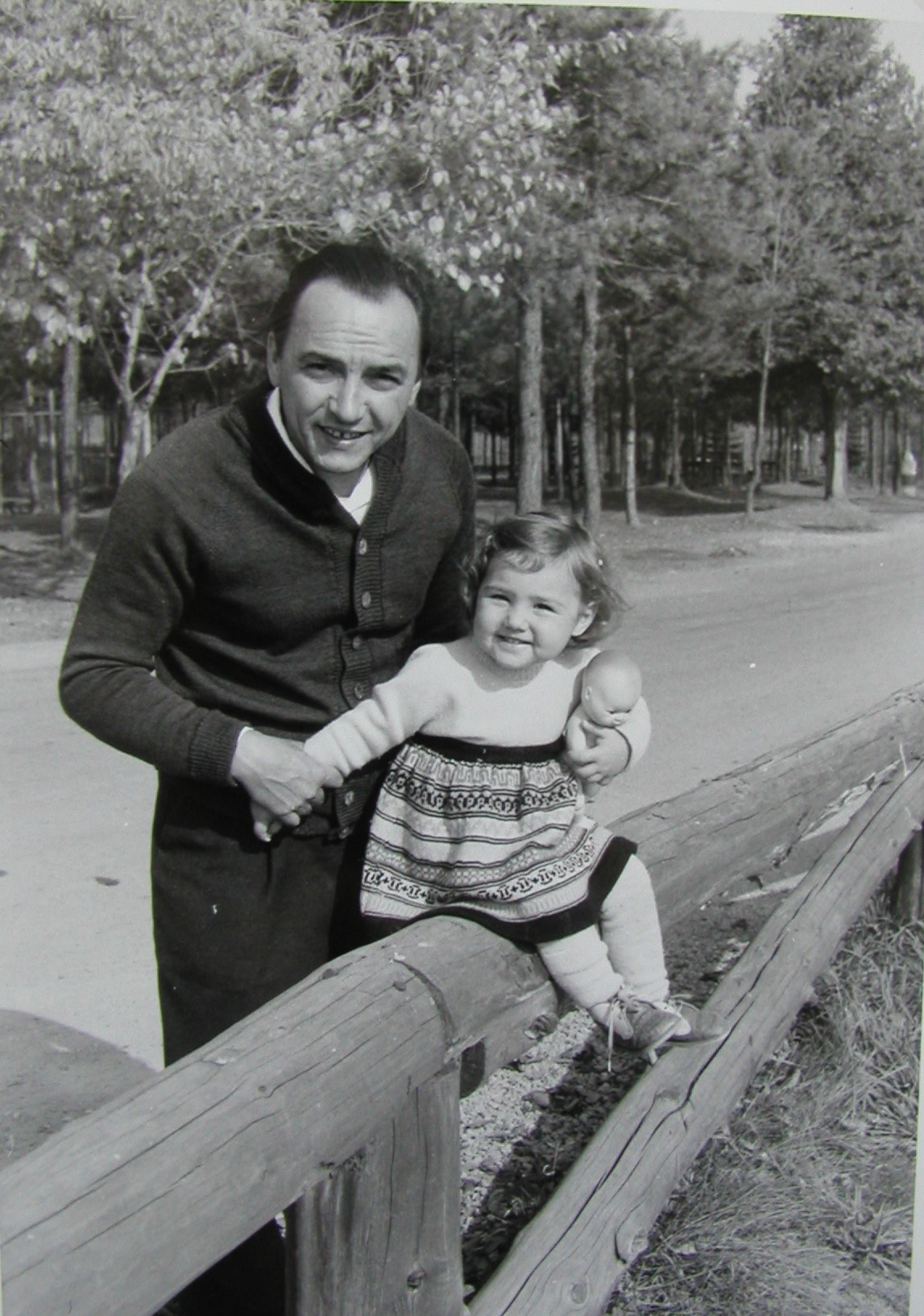
My family did, however, value its history. My Spanish father in particular was immensely proud of his heritage and had a large chest full of old family documents. Mostly, they dealt with land transactions and inheritances and the oldest dated from 1599! As a teenager I spent hours with my father poring over documents like the one in the picture on the left. (The picture below is me with my dad, ca 1963.)
Today I work overwhelmingly online, utilizing a huge and ever increasing number of resources. Increasingly, I am also becoming involved in genetic genealogy, using DNA to identify unknown recent ancestors and so add to clients' knowledge about their family's history.
A new, quite exciting venture is combining family history research with my work as a Clinical EFT Certified Practitioner. Doing so allows us to not only learn about our families' pasts, but also process and heal intergenerational trauma and dysfunctional patterns created by our ancestors' life experiences. Then we can not only live our lives free of the burdens of the past but also prevent them being passed on to the next generation!
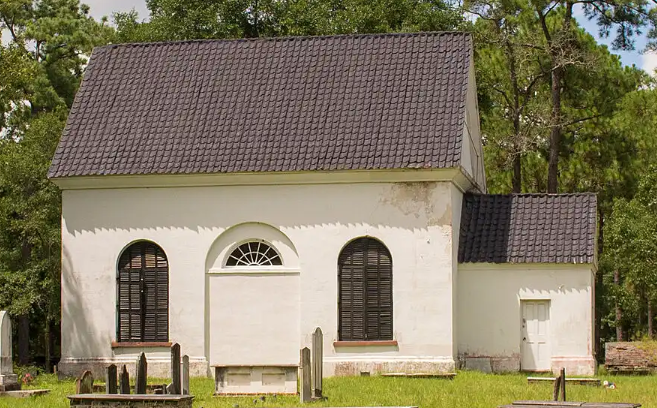
A Possible Acadian Ancestor in 19th Century Charleston, SC
This week’s case study: A DNA test had uncovered Acadian ancestry. J., the test taker, wanted to know whether that part of her heritage could have come down from her ancestor Samuel T. Martin, born in Charleston, SC around 1823.
The challenge: First, a bit of historical background.
Charleston was founded by the English in 1670. The initial settlement wave included wealthy "second son" planters from Barbados who brought a pre-established Caribbean plantation system with them. Administrative districts and social services were organized by Anglican parishes.
Fleeing religious persecution in France, Huguenots started arriving after 1680. The Huguenots were not typical impoverished refugees; they represented the highly educated, professional middle and upper-class elite of France - wealthy merchants, international bankers, maritime traders, and highly skilled master artisans. Recognizing the warning signs before their rights were officially revoked in 1685, wealthy Huguenot families spent years quietly liquidating their property, converting their fortunes into gold, silver, and jewelry, and smuggling these valuables out of France. The Huguenots were also pioneers in early modern international banking. Utilizing sophisticated networks of trans-European Protestant merchants, a family could deposit their capital with a trusted banker in Bordeaux or Paris and receive a physical "Bill of Exchange." Once they successfully escaped to London or Amsterdam, they cashed in these paper bills for local currency, completely bypassing French border guards. To top all this off, the Huguenot refugees were heavily supported by the English Crown. It was not purely altruistic; English monarchs viewed the influx of French wealth, intellect, and global trade connections as a massive geopolitical win that would simultaneously drain France's economy. The English Crown directly funded and chartered the ship Richmond to transport the very first wave of French Huguenots to Charleston free of charge in 1680. The Crown also guaranteed Huguenots the same generous land grants offered to English citizens - roughly 50 to 100 acres of prime Lowcountry real estate per family member or servant they brought with them. Despite early language barriers, the Huguenots assimilated rapidly and intermarried with the English elite. By 1700 there were about 1500 Huguenots in South Carolina.
Presbyterian Scots and Scots-Irish immigrants arrived in waves throughout the 18th century, establishing, amongst other things, Presbytarian churches.
Forcibly deported from Canada by the British in 1755, the Catholic Acadians arrived in Charleston as destitute, untrusted wartime prisoners. Viewed with hostility by the Protestant elite, most faced forced labor or quarantine on Sullivan's Island; the vast majority eventually left for Louisiana (becoming Cajuns). Some of the most enterprising ones even made their way back to Canada, or to France. Only a very few Acadian families remained in Charleston.
Fleeing revolution in the 1790s, white planters from Saint Domingue – which was to become Haiti – started arriving in Charleston, accompanied by free people of color (gens de couleur), and enslaved people. They brought with them French-Caribbean culture and caused a massive expansion of the local Catholic community.
Arriving primarily in the mid-18th and 19th centuries, Lutheran German and Swiss immigrants sought economic opportunity and religious freedom.
Unfortunately for our purposes, the surname “Martin” is equally common in English, French and German, so, the name alone does not allow us to even guess which of these immigrant streams Samuel belonged to. But surviving passenger lists for the six ships that transported the Acadians to Charleston tell us that at least three Acadian men named Martin landed there: Pierre Martin, with one child, Paul Martin with wife and 3 children and Jean Martin with wife and 5 children.
As always, we start with what is already known. The 1850 US census shows Samuel Martin living in St Thomas and St Denis parish in Charleston, South Carolina. He is 27 years old, so, born about 1823, a planter with $1500 worth of real estate. Living with him are 22-year-old E. J. Martin, likely his wife, two children, 51-year-old Jane Cantley and 30-year-old J. B. C. Martin.
Parish registers for St Thomas and St Denis have survived, if somewhat incomplete, and have been digitized but can for legal reasons only be viewed at a FamilySearch Center – which I did not have time to do. However, in the early 1880s the parish tasked their rector, Robert F. Clute, with transcribing and publishing what remained and was still legible of the parish registers, to which he added information gleaned from other sources including cemetery headstones. This 1884 publication can be accessed at Internet Archive.
Clute noted that marriage and baptism registers for the years 1790 through 1823 were already completely missing. Which means it was not going to be possible for me to find a Baptism for Samuel T Martin, born in 1823. However, we can find his marriage to Eliza Jane Philips on 19 Dec 1843. Sadly, the good rector did not think to include the names of the witnesses or parents in his transcript which so often are key pieces of genealogical information.
A quick search for other “Martin” entries in the parish register came up with the following:
1. There were Martins already present in the parish prior to the arrival of the Acadians
2. Only two Martin baptisms were ever registered.
One was William Henry Martin born 26 Oct 1844, baptized 11 May 1848. Parents – Samuel and Eliza.
The second one was earlier, Hamlin Martin, born in Dec 1827 to parents John and Frances Ann, baptized 17 Mar 1829.
Since Hamlin Martin’s birth was not much later than Samuel’s, could John and Frances Ann possibly be Samuel’s parents as well?
Now began the search for other documents that could shed light on Samuel’s parents. The first one I found was the 1842 will of another Samuel Martin of St Thomas and St Dennis, planter, leaving his estate to his three grandchildren, John Baptist, Samuel and Ann L. Martin. He wished to be buried in the episcopal church of St Thomas and St Dennis. As executors, he appointed his “esteemed neighbours”, John L. Poyas and Joseph Winges. This was promising. Remember the J. B. C. Martin living with Samuel and Eliza in the 1850 census? Samuel’s brother – John Baptist. The fact that the grandfather was leaving his estate to his grandchildren indicates that both parents had to have been already deceased.
In June 1850 William B. McDowell brought a suit before the Charleston Court of Ordinary Partition to sell the real estate of the late Samuel Hamlin, about 986 acres. The court summons explicitly lists among the surviving heirs: John B C Martin, Mrs Lucinda A. Winges (& Joseph Winges her husband) & Samuel Martin, children of Mrs. Frances Ann Martin, decd," legally proving their right of inheritance through their mother into the Hamlin estate. Samuel Hamlin had died in 1848. His 1846 will, which made William McDowell and Francis D. Quash his executors and also named his deceased daughter Frances Ann, was being contested. The court proceedings note that the “decedent had intimated to witness that he should not give much more of his estate to his grand children the Martins as they had treated him disrespectfully and he apprehended he had done about as much for their mother as he could for his other children”.
Frances Ann Martin, widow, had died intestate in 1834; administration of her estate had been granted to her father Samuel Hamlin.
Another court document, from 1835, showed that there had been an error in the administration of Frances Ann’s estate: it had been assumed that her estate consisted of all the property in her possession at the time of her death. Legal advice later determined that it had actually belonged to the estate of her deceased husband, John Martin, and that her estate only consisted of a third of his estate – what she was entitled to as his widow.
John Martin had also died intestate, around the same time as his wife. His father-in-law, Samuel Hamlin, was granted administration of his estate.
The inheritance led to a good deal of strife among the three siblings which unfolded as follows.
A marriage notice in the Charleston Observer of 12 Feb 1839 reads that Lucinda Ann Martin married Joseph Wienges – the same Joseph Wienges who had been one of the “esteemed neighbours” of Lucinda Ann’s grandfather Samuel Hamlin and the executor of his estate. The 1850 census has Joseph and L. A. Winges living in Kershaw, South Carolina with their children Samuel (11), James (9), Josephine (3) and an unnamed infant.
In 1844 Joseph Wienges sold his wife Lucinda’s share of the inheritance to her brother John B. C. Martin for $300.
In 1848 John B. C. Martin in turn sold his land to his brother Samuel Martin for the sum of $250.
Joseph Wienges died in 1853, leaving his wife Lucinda with 5 young children and no means of income. To make ends meet she started keeping a boarding house in Charleston. To support her, her brother Samuel promised her $300 on the understanding that this would be the release of her dower, later increasing the sum to $550. In return, Lucinda relinquished any claim on her share of her grandfather’s estate to Samuel. When Lucinda remarried in 1954, to Samuel S. Yeadon, she and her new husband sued her brother Samuel, claiming that she had never received the payment. The suit additionally claimed that the sum that had been promised to her had been insufficient anyway, given the actual value of the estate, and that her first husband, Joseph Wienges, had sold her inheritance without her consent. In his separate statement, John B. C. Martin also claimed that when he sold his share of the estate to his brother Samuel he did not understand the true value of the property and had accepted an insufficient amount of money which he had never received either.
We have established that there were three Martin siblings, Samuel, John Baptist and Lucinda Ann, whose mother Frances Ann was the daughter of Samuel Hamlin and whose paternal grandfather was Samuel Martin. We also saw that Francis Ann (Hamlin) Martin was married to John Martin and that there was a fourth child, Hamlin, who must have died young as he was not mentioned in the will of either grandfather.
J, who submitted this case, mentioned that her great-aunt had always maintained that the Martins had been “tories”, meaning that they had been on the side of the British Crown in the Revolutionary War. I couldn’t resist such an interesting piece of information and did another dive into the records. First, more history:
When the British army captured Charleston in May 1780, landowners faced a choice: lose their property or capitulate. To secure their plantations and other property, hundreds of citizens signed Oaths of British Protection.
In January 1782 the resurrected South Carolina Patriot government met at Jacksonborough. They passed the Confiscation and Amerciament Acts.
-radically active Tories were placed on Confiscation Lists to have 100% of their land seized and were sentenced to banishment.
-sympathizers who had merely taken British protection to save their wealth were placed on Amerciament Lists, which fined them a strict 12% wealth tax but allowed them to keep their land.
On December 14, 1782, the British army officially evacuated Charleston. This triggered a massive, chaotic exodus. Nearly 4,000 white Loyalists packed onto British ships in the harbor. Those on the Confiscation Lists fled permanently to Jamaica, the Bahamas, Florida, or Nova Scotia, knowing they faced immediate arrest or violence if they stayed.
Loyalist landowners who chose to stay behind had to petition the South Carolina General Assembly and seek support from their Patriot neighbours. If the Assembly accepted their petition, they had to sign a Treasury Bond, pledging a piece of real estate as collateral until they paid off their 12% amerciament fine.
The Confiscation and Amerciament lists survived and can be searched. Alas, no Charleston Martins can be found in them. This does not mean that the Martins were not Tories, it may just mean that at the time they didn’t own properties that could have been confiscated or enough wealth to be fined. Instead, less wealthy Tories faced social ostracization, extrajudicial punishments, and legal and economic disfranchisement. Many fled or moved, others used a “keeping their heads down” strategy to gradually assimilate back into society.
Further research into legal documents may yet uncover how the Martins fared during and after the Revolutionary War.
We have successfully extended the Martin family tree back two more generations. The documents show that the Martins were well established in Charleston society, with connections to Huguenot (Poyas), Scots/Irish (Cantley and McDowell), German/Swiss (Wienges), and English (Hamlin and Yeadon) friends, neighbours and relations. By the 19th century, they were significant plantation owners and worshipped in a Protestant church. All this makes it rather unlikely, though not completely impossible, that they were originally Acadian. Further research would likely allow us to extend both the Martin and Hamlin lines further back in time.

@ Copyright 2026 All Our Pasts Are History | All rights reserved
@ Copyright 2026 All Our Pasts Are History
All rights reserved